Melbourne Theatre Company
11 March 2023
The Sumner, Southbank Theatre
To 15 April 2023
mtc.com.au
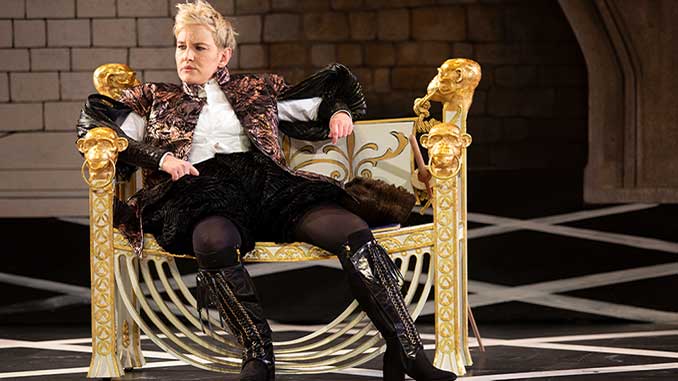 | |||||||||||||||
| Kate Mulvany in "Bernhardt-Hamlet". Photo by Pia Johnson |
My review is on Australian Arts Review.
Mostly Melbourne theatre reviews
| |||||||||||||||
| Kate Mulvany in "Bernhardt-Hamlet". Photo by Pia Johnson |
My review is on Australian Arts Review.


 |
| I still am |
Well, the last time I put something on here was about the time I caught Covid and that was a life time ago or last week. I'm not sure. It was a tough time.
Our industry took a beating, but we're still here and we're beginning to thrive again.
I'm mostly on Instagram now: @SometimesMelbourne.
I've written a few reviews over the last year or so and will put them up as backdates. They were all published elsewhere, so the love was shared.
And you can here me on radio RRR SmartArts every second Thursday where I talk with Richard Watts about all of the amazing shows I've seen that fortnight.
 |
| "Sunday". Photo by Pia- ohnson |
My review is on Australian Arts Review.
The big catch (March 2022)
Annie and Lena
Different Now
9 April 2022
Queen Victoria Women’s Centre
 |
| Annie and Lena, Different Now |
The big update (March 2023)
Diana Nguyen
Chasing Keanu Reeves: An Encore
6 April 2022
Green Centre
 |
| Diana Nguyen |
The big backdate (March 2023)
Laura Davis
If This Is It
2 April 2022
Campari House
 |
| Laura Davis |
The big backdate (March 2023)
The Who’s Tommy
Victorian Opera
22 February 2022
Palais Theatre
victorianopera.com.au

Declan, Declan, Declan, I am so sorry.
I got Covid.
It ate my brain.
I thought I'd published it.
A good reminder of a lesson best remembered: that we should be questioning every part of the traditional theatre-going ritual.

Declan Greene
Artistic Director Griffin
Thinks he looks like Crispin Glover, but I don't see it
What theatre/art/creative experience did you love the most in 2021?
It feels a bit rude writing about this amongst all Melbourne artists, ‘cos in Sydney we weren’t quite as locked-down over the last two years... So let’s start with the online stuff, which was all Melbourne-based ‘cos frankly no-one did it better than Melbourne in 2021.
Among my faves: Lou Wall’s That One Time I Joined The Illuminati and Louisal the Musical were seriously, compulsively watchable works of musical-Youtuber-autofiction-investigative-journalism (my favourite new genre). Marcus McKenzie’s The Crying Room turned my tender brain to soup; he is a clever, clever boi. Stephen Nicolazzo and Monash CTP’s Body Horror was startling and trippy.
IRL here in Sydney, I had two favourite shows –both by indie companies. There was Dinosaurus’ production of David Henry Hwang’s Yellow Face, directed by Tasnim Hossain at KXT. Then Green Door Theatre (with Darlinghurst Theatre Company) gave us Shari Sebbens’s playful-but-lacerating production of Jasmine Lee-Jones’s Seven Methods of Killing Kylie Jenner, with two towering central performances. Moreblessing Maturure was mind-blowing; she had you scream-laughing one minute and choking back tears the next.
Then... at the other end of the scale, Kip Williams’s one person adaptation of Oscar Wilde’s The Picture of Dorian Grey was exactly as thrilling as you’ve heard. The bombast of the video design was matched beat by beat with Eryn Jean Norvill’s superhuman feat of transformative performance. As president of the Marg Horwell fanclub, I was also in giggles at the details she snuck into the set design of this polished prestige production. My favourite was a lush floral bouquet, which, when you looked closer, was made of $2 fake flowers, plastic fruit, and one or two rubber zombie hands.
What surprised you about finding new ways to make art in locked-down worlds?
I was really inspired seeing how a lot of people responded to these new parameters. There were the online shows I mentioned , but also the alternative models of presenting shows IRL. I couldn’t get to see Malthouse’s Because the Night, but, from afar, I think what they did was by far the bravest, boldest, and most successful gambit of any mainstage theatre company in Australia making work in COVID times.
To toot Griffin’s horn, when we realised we could only fit 20 people in the SBW Stables under COVID restrictions, we figured out a way to stage a work outdoors in 2021: Elias Jamieson Brown’s Green Park. This was staged in the real Green Park – a site of huge historical (and fraught) significance to Sydney’s queer history, the ghosts of which rattle around in Elias’s play. We really didn’t know if any of this would work. None of us had ever done a play outdoors before, and we also didn’t know if our very-theatre-going audience would be into it. So, it was incredible to see patrons (some of whom had been coming to the Stables for 20 or 30 years) bringing picnics and lawn chairs to watch a Grindr hook-up play out in this grimy, beautiful little urban park. A good reminder of a lesson best remembered: that we should be questioning every part of the traditional theatre-going ritual.
What did you do to stay connected to your arts community?
While our theatre was dark, Griffin basically became a script development workshop. We channelled a big chunk of our disaster funding into seeding projects from artists, including new works from Melbourne icons like Sarah Ward and Bec Matthews, as well as Jean Tong, Lou Wall and James Gales.
Socially, over the lockdowns I wasn’t as good at remaining connected to my community – neither my old one in Melbourne nor my new one here in Sydney. I really missed Melbourne a lot. Even though in most theatre foyers I’m a slime-coated rat eyeing for a crack in wall to squeeze out of... I missed those spaces a lot. You hold an unexpected number of important relationships in the foyers or courtyards of places like La Mama, Theatre Works, Dancehouse ... with people who you really miss when you’ve spent two years away (like you, Anne-Marie!)
What are you looking forward to in 2022?
I’m REALLY looking forward to finally delivering a Griffin season where all the plays actually happen!!!
....But apart from that wild pipe-dream...
Here in Sydney there’s a ton of stuff I’m looking forward to - because there are so many new plays premiering! OMG. It truly feels like we’re out of the European-Canon-But-In-ASOS era. KXT
Bakehouse’s 2022 program is super strong. I’m really looking forward to Charlotte Salusinszky’s Little Jokes in Times of War; Saman Shad’s The Marriage Agency; Kenneth Moraleda and Jordan Shea's One Hour No Oil. At Ensembl: Brittanie Shipway’s A Letter for Molly. At Belvoir: S. Shakthidharan and Eamon Flack’s The Jungle and the Sea, and Vidya Rajan’s adaptation of Looking for Alibrandi, directed by Stephen Nicolazzo. At STC: Glace Chase’s Triple X. It’s wild, but there are SO MANY MORE I haven’t mentioned here.
And then hoping I’ll get down to Melbourne... I’m really looking forward to Carly Shepphard’s Chase and Aran Thangaratnam’s Stay Woke at Malthouse (I’ve read Stay Woke and it’s WILDLY, WILDLY funny and smart). Philip Adams and Ryan New’s SICK! at Temperance Hall, as part of Midsumma. And Arts House has shows by my favourite Australian theatre-makers of all time... the Rabble’s YES and Daniel Schlusser Ensemble’s Hercules. Oh god, and I’m fkn desperate to see something at the new La Mama ASAP...
Eugyeen Teh and Keith Gow are both regulars on SM and supporters of SM. Both talk about how they using the endless time of lock down.
Eugyeene Teh
Designer, sewer, really butch gardner
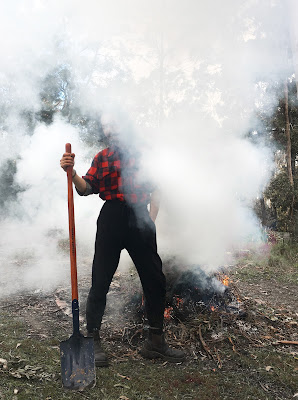 |
| Eugyeene Teh: always dressed perfectly |
Stephen Nicolazzo and the students from Sir Zelman Cohwen School of Music and Performance’s Body Horror at Melbourne Fringe justified the black holes existing in our brains with raw, explosive and incredibly fun imagery channeled from the students’ bloodied bedrooms. Finucane and Smith also brought all the intimacy of live performance to the home screen, via a bathtub that reminded us of the plight of the planet and the melting icebergs in Antartica. Patricia Piccinini’s exhibition, A Miracle Constantly Repeated, the only surviving artwork from RISING festival, pushed through with an outpouring of empathy. And Cheryl Ho and her collaborators summoned memories of my displaced home and family in 落叶归根 (Luò yè guī gēn) Getting Home at Melbourne Fringe.
What did you do to stay connected to your arts community?
Apart from steadily working through five solid shows that got cancelled just before bump in, I instigated ways to creatively engage with the community through various forms. Ultimately, they served as a documentation or marker of this very significant time that we are all experiencing.
Less minimalist tasks included co-creating an awards ceremony and hand-crafting its physical awards, (my 71-year-old neighbour helped me chainsaw the wood when my chainsaw was getting fixed) on a voluntary capacity, and making customised masks for anyone who wanted them. They were both ultimately rewarding, though unsustainable, and a great learning curve. As an exercise, I was interested in seeing how much I could create and share, with as little time, resource and energy as possible – a mindset or skill I knew that is essential to take into the next era. One of these is a simple, lateral social media persona I created re-framing some menial activities I was already doing: #gardeningwitheugyeene is ironic glam gardening based on true events.
What are you looking forward to in 2022?
I look forward to working creatively in the flesh, the thrill of putting up a show, seeing shows again, and seeing friends, in foyers, and free champagne – all in moderation!
SM: Eugyeene became the co-President (with Sapidah Kian) of Melbourne's Green Room Awards in 2020. His discussion of reconsidering our values and letting go of staid conventions is very relevant (and exciting) here.
I have one of Eugyeene's early masks – I have an original Teh! – and he helped inspire me to start sewing. 400+ masks later, the one I was most proud of was one I made for Eugyeene (from sarong fabric I bought in Kuching). I knew that if I could give one to a master stitcher, my skills were heading in the right direction.
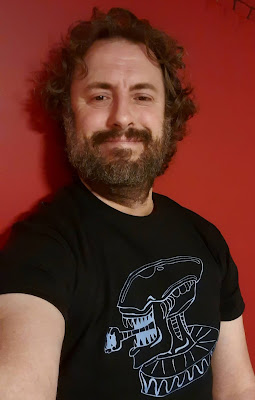
Keith Gow
Playwright, reviewer, knows that sci-fi is as good as those plays we revere
Very productive in lockdown
What theatre/art/creative experience did you love the most 2021 (or 2020)?
For a year that was strangled by multiple lockdowns in Melbourne, I still got to see some great theatre. Come From Away, which I saw for the second time, felt like the perfect return to big budget musicals after a complete absence in 2020. Sexual Misconduct of the Middle Classes was an excellent well-made play at MTC. The immersive experience of Because the Night was truly memorable because of the excellent design and some searing performances, even if the narrative didn’t quite work. The fact we got a new Patricia Cornelius/Susie Dee collaboration in RUNT was very special. And two shows at La Mama Courthouse from new writers made me excited to see where those writers would go: This Genuine Moment and Cactus.
I also adored the Patricia Piccinini exhibition at Flinders St Station, the only part of the first Rise Festival that survived lockdown.
And Daniel Lammin’s Ink & Paint podcast is a truly wonderful thing that has helped me through both years, prompting me to watch classics I’ve never seen or haven’t seen in years, prompting lots of discussions with friends and loved-ones about Disney animated classics.
What surprised you about finding new ways to make art in locked-down worlds?
Even though one particular show I’ve been working on was bumped from two Melbourne Fringes in a row, I’ve been quite lucky to make a few little things over 2020 and 2021 that have been really satisfying. Some of it has been online and some in the flesh (one show I directed ended up doing both) and it felt like a real privilege to being making work happen during these disastrous years.
Zoom rehearsals were a blessing and a curse. Keeping up momentum was really important, particularly during our most recent lockdown with Fringe 2021 in sight. We’d started rehearsing earlier in the year, thinking we had plenty of time and then the floor disappeared from under us again. But being able to keep in touch with actors and have them learn the text during those months was really satisfying. And allowed us to hit the ground running when Melbourne started to open up again.
I had a short play live-streamed last year. I directed a monologue that was filmed in 2020 and then staged in 2021 – and even though those two mediums have fundamental differences, it was fun to find ways to play the same piece differently.
And that play I’ve been working on for two years, well it’s better now than it would have been had we done it at Fringe 2020. Even better than if we’d done it at Fringe 2021. And luckily we get to stage Shakespeare Aliens at Theatre Works in January; our two years of development was not in vain.
What did you do to stay connected to your arts community?
I watched some streaming theatre. I chatted with theatre makers on and off Twitter. And I kept writing and sending things off for feedback and development. I kept making work and it’s probably been the most productive two years I’ve had for a decade. It only took a pandemic…
These two years have taught me what my real priorities would be going forward. I’ll probably be writing less reviews in 2022. I’ll still see lots of theatre but I also hope to keep making more. I wrote a full length play this year that’s the best thing I’ve written, so I want to take time to develop it.
What are you looking forward to in 2022?
I’m so excited that La Mama is re-opening with a festival and I can’t wait to see shows in the newly built recreation of the original theatre space. I can’t wait for Looking for Alibrandi at Malthouse, as well as Stay Woke. MTC has a solid year of brand-new works, though I’m excited to see Fun Home again and I can’t wait to catch up with Cyrano and Sunshine Super Girl after they were delayed. And I want to make it to Sydney to finally see The Picture of Dorian Gray after missing out four times (!) so far. I mean, I literally had four different dates over the last two years and two cancelled flights to see it. I need to make this happen.
SM: Shakespeare Aliens. SHAKESPEARE ALIENS!!!!! I love Aliens. (I love Alien more, but that's a different show.) I've been looking forward to this for a long time and it may take an alien invasion to stop me seeing it in January at Theatre Works.
I've missed talking to Keith after shows. He sees so many shows and is one of the biggest supporters of indie theatre in Melbourne. I look forward to much more talking next year.
Telia Nevile and Bron Batten were also in the first What Melbourne Loved. I first reviewed Telia in 2006 and Bron in 2008. I first saw Telia perform in 2001 and I would have seen Bron at one of the first Last Tuesday Society shows. I've since seen whatever work of theirs that I can. It's amazing to watch artists develop and find their voices and create such incredible and original work that comes straight from their hearts.
Bron Batten
Theatre maker, producer, performer
Jobkeeper tax expert, excellent hair
 |
| Bron Batten. "Waterloo" |
What theatre/art/creative experience did you love the most in 2021?I can never just narrow it down to one! So I won’t. I absolutely adored Alisdair Macindoe’s Reference Material at Northcote Town Hall. Sexy, clever, funny, smart, bursting with ideas and self-aware but not (too!) smug. And a dance work. Wonders never cease. Remount please.
I saw Michelle Brasier’s Average Bear on Sunday night and it should have won the Best Of at this year’s MICF. Brutally funny and utterly beautifully sad, I ugly laughed/cried the whole way through. Voice of an angel and an absolute quadruple threat.
I was lucky enough to make it up to Darwin to perform at the festival and as a result finally saw Selina Jenkins’s Boobs. And it was just as wonderful as everyone had constantly said it was. She’s a master of the raised eyebrow and managed to turn the audience on a dime, whilst holding them carefully in the palm of her hand. Plus, great songs and timeless nipple-centric material.
I was also fortunate to see Alice Sing, the great choir from Alice Springs, kill it at their Darwin Fest show, Red Desert, Endless Sky, under the tireless guidance of their super-talented choir master Edward Gould. Beautiful original compositions and arrangements and 50 people singing together who were mic-ed up properly. Unheard of in a lockdown world and completely goosebumps/tear inducing. Magical. Ed and I used to run the OG choir together in Melbourne under the various guises of Choir Straits, Your Love is Lifting Me Choir and This Sex is on Choir. Alice Sings is much, much, much better.
Also, while I’m here, massive shout out to the Darwin Festival team for getting through a mid-festival lockdown, re-scheduling shows on the fly and being massive babe legends throughout. Oh and honourable mention to Lou Wall’s That One Time I Joined The Illuminati. Told you I wouldn’t be able to pick just one.
What surprised you about finding new ways to make art in locked-down worlds?
Christopher Green’s No Show for The Yard Theatre in London utilised its Zoom audience in clever ways, with audience participation involving home-based tasks, assigned character quests, spotify dj-ing and group karaoke. It was totally worth staying up until 4am to watch it during a timeless lockdown netherworld.
I also experienced several shows during Melbourne Fringe 2020 that involved packages being delivered to your house – and the utter delight in receiving personally addressed mail which is not electricity bills never, ever, ever wears out.
What did you do to stay connected to your arts community?
I spent a lot of time in 2020 working as one of the many admin’s on the Facebook group Australian Arts Amidst COVID-19, founded by Perth artist Alex Desebrock. In the aftermath of the March 2020 shutdowns AAAC19 provided a focus, gathering point and community contact for many members of the arts ecology throughout endless lockdowns. We tried to help people with the administration involved in seeking government assistance and financial help, relief grants and Centrelink etc. And I was constantly astounded by the generosity, kindness, knowledge and support people offered each other throughout that utterly terrifying time. Though I NEVER thought I’d now know this much about the taxation laws surrounding JobKeeper.
What are you looking forward to in 2022?
TOURING! (Hopefully!)
SM: In what world could Bron and I ever have imagined that my favourite memory of her would be her FB group reminders to put in Jobkeeper details? It's ridiculous, right!? I was also thrilled that she got to Darwin with Waterloo, which I've only seen once (!) and have no idea what its turned into since its first run. Hopefully we will see it in Melbourne again.
Telia Nevile
Poet, performer, photographer
Where punk and delightful collide
 |
| Telia Nevile |
What theatre/art/creative experience did you love the most 2021 (or 2020)?
I loved how the arts (of all types) became more accessible, opening up to people who can’t leave their homes, navigate physical venues, make it into the city, or be in crowds. Being able to watch arts from all over the world was also incredible; it felt a little like being a kid in a candy-store, being free to curate my own festival rather than wait for someone else to do it for me. On top of this, the arts community has always been generous with their time and their skills, but it hit new heights with workshops and classes and online dance parties popping up all over the place. It’s crazy to me that the arts aren’t always recognised as the thing that brings us together and makes us better because they do, and for all of the many, and long, lockdowns, they did. I was just so proud to be part of such a wonderful community.
What surprised you about finding new ways to make art in locked-down worlds?
It’s a totally different mindset, and once I got my head around it, it surprised me that the show I wrote will have two completely different lives and two ways of expressing itself – the filmed version and the live version. It’s no longer enough to just film a live performance and say that it’s available digitally – it’s a completely independent version of the show that needs to be reimagined and made in its own way. I can’t wait to perform Little Monster live and feel how the show shifts and changes.
What did you do to stay connected to your arts community?
As lame as it sounds, I signal-boosted every post I saw of people making stuff, or achieving things, or just sharing small things to be happy about, because now, more than ever, we need to be as supportive as we have the spoons to be. I messaged people I usually just run into in foyers, to tell them that I’d read their posts and felt the same, or seen their digital works and gotten joy from them, or that what they were doing was amazing (because it is). Social media is usually quite alien to me, but during the lockdowns, it felt more like the community noticeboard I always wanted it to be.
What are you looking forward to in 2022?
Seeing lots of live performance with an increased focus on accessibility. Seeing live shows and then seeing their digital versions to enjoy the different interpretations and suck as much marrow from the bones as possible. Hopefully touring again to NZ, and then maybe in 2023 to Canada again. Watching the vigour return to community members who were drained by the big C, when they get the chance to do what they love again.
SM: Telia's Little Monster (the filmed version) was glorious and it so won The Best in Festival at Melbourne Fringe. I watched it twice in one day. Watching it felt like she was talking directly to me – and so few shows managed that when they did the big pivot. I am booked in for the opening night of her live version. She also accidentally introduced me to the acidentally-vegan yum of Hob Nobs.
Daniel Lammin and Ash Flanders are total SM favourites and have told us what they love since it began. Today one asks:" What’s the fucking point?". The other asks: "Can chronic narcissists be grateful?". Both answer beautifully.
Ash Flanders
40
 |
| Ash Flanders (Easier than the Zoom button that makes you look pretty.) |
What theatre/art/creative experience did you love the most 2021 (or 2020)?
Oh, Lord, what is time? I can’t remember this morning let alone the year. I really enjoyed seeing Fuck Fabulous at Arts Centre Melbourne. I’m a major fangurl of Sarah Ward so it was a thrill to come out of lockdown and see the beautiful, trashy, super-smart, incredibly entertaining, political world she created. But it was the offstage world that stuck with me. The night I attended had such a weird mix of an audience and it felt like none of us knew how to even be in a theatre. But I’ve never felt a crowd so connected to each other as when a performer peed in a glass and held it out to the audience. As soon as one person yelled out DRINK IT – in my mind, a freaked-out guy in a suit who couldn’t believe the words had leapt out of his mouth – we all joined in. We were one puerile collective mind. You’ve never felt the collapse of gatekeeping more than hearing 200+ people in the arts centre chanting for someone to drink their own piss. It was infantile and joyous and when the performer skulled the whole thing it was like Jesus with the loaves and fishes: one jar of piss quenched all our thirst.
Selfishly, I have also loved being able to present SS Metaphor at Malthouse. I’ve always appreciated the production side of things but seeing a whole team of people come together to help execute this thing I wrote was very, very moving. Which begs a larger question – can chronic narcissists be grateful? Yes, yes we can.
What surprised you about finding new ways to make art in locked-down worlds?
I went long on the last question so I’ll just say that I never knew I could write a play from my own wardrobe, but I sure can! I wasn’t surprised that as artists we all found ways to continue our work and problem-solve, but, sadly, I also wasn’t surprised by the lack of government support. Personally, I was most surprised to learn that I really can’t live without writing. And that at 40 I’m still happy to rehearse out of Stephen Nicolazzo’s apartment and use a TV remote as a mic.
What did you do to stay connected to your arts community?
Almost everyone I’m friends with is part of the arts community so a lot of it was just checking in and hanging out whenever we could, either virtually or on long walks. Those long walks were actually my favorite thing about lockdown. Conversation flows so well on a walk, especially if it’s with Richard Higgins and you have a whole graveyard to explore. I also have to say I was lucky enough to get two shows up this year which sounds amazing until you realise Ash Flanders is Nothing only ran for two nights and SS Metaphor could still be sunk by killer bees, another cheeky earthquake, or, I dunno, an asteroid?
What are you looking forward to in 2022?
(Hopefully) Finally getting to do a full season of my show End Of. at Griffin Theatre in Sydney. It might even mean I get to go on a plane, see some friends I haven’t seen in two years and tell a whole new city about my favourite monster, Heather Flanders. I’m also looking forward to getting to see more theatre, doing a little mentoring and hopefully writing more stuff. I think lockdown has really taught me to appreciate any chance I get to do this theatre stuff, so it’s all gravy, baby (ewwww).
SM: My favourite memory of Heather Flanders was 2020 opening night of End Of. It was the day before the Comedy Festival cancelled. A day when we didn't know if theatre kissies would kill us. Heather came in for a hug and, "Well, we've gotta die from something." I so hope Sydney gets to see End Of. END OF.
I've seen less than usual of Ash this year (he didn't ask me to go for a long walk in a graveyard with Richard Higgins), but I went to a preview of SS Metaphor last night the Malthouse. As it's was a preview, it will be different by opening night. But, think "Carry On The Poseidon Adventure" with queer heroes and Ash playing the straight captain in a moustache, and a wannabe who thinks they can save the never-ending cruise with entertainment – and tap dancing, which is now is etched in my soul.
Daniel Lammin
Director, writer, Disney fanatic, film critic
 |
| Daniel Lammin. |
What theatre/art/creative experience did you love the most and how did you stay connected?
I didn’t see a lot of live performance this year. I could use the lockdowns as an excuse, but the truth was that I just... didn’t want to. With the precariousness of the world at the moment, I turned to cinema for artistic need and comfort rather than theatre. As much as nothing gives me greater joy than sitting in the dark and watching a piece of live performance burst into life before my eyes, I find the moments beforehand (congregating in the foyer, small talk, those gross bits of networking we inevitably end up doing) almost too difficult to bear, and that was before we were locked in our houses and both my sense of myself as an introvert and my social anxiety increased. In a year when so much was distressing or confronting, I just didn’t have the nerve or the energy to return to the community again in the same capacity. Frankly, I was too scared, as scared as I always have been, but now all the more aware of how anxiety-inducing the world of a theatre foyer can be for me.
Maybe that’s why I had a great time wandering around Because The Night. I didn’t particularly enjoy it as a piece of theatre, but what I loved was the complete anonymity it gave me. I could fully engage with this work, be part of a collective in the act of experiencing it, and no-one had a fucking clue who I was and I didn’t have a fucking clue who they were. I could be present without any sense of anxiety, and allow myself full permission to observe and to play.
That sense of engagement without the terror of the theatre foyer reached its sublime peak for me
with St Martins’s flat-out wonderful online production Us, created by Katrina Cornwall and Morgan
Rose, who are pretty much my favourite theatre makers in Melbourne. It wasn’t an online work made out of necessity, but one that was actually fucking interested in the digital form. We’ve seen far too many artists treat this form as second-rate, but Kat and Morgan and this remarkable group of young people and their parents fully engaged with its possibilities, looked into every nook and cranny for what could be done and made something so alive and generous and moving and communal. I felt more seen by and connected to these performers than most in-person work I’d seen, and they couldn’t even see that I was there. It gave me that giddy feeling I used to get in the old world before Covid of seeing something special – and god I loved it. There was a generosity of spirit, a joy in the act of creating and sharing, all aspects that are indicative of Kat and Morgan’s work together.
The same can be said of their gorgeous Riot Stage work this year, Everyone is Famous, which was another act of theatrical generosity. That one had the extra power of having seen these young people grow as theatre makers through the many years of Riot Stage work, see their ideas sharpen and their voices get louder. There was no separation of us-and-them, no sense of watching young people as if they were animals in a zoo. In that instance, my agony in the foyer beforehand was worth it for the
magic I saw in the theatre itself.
As well as discovering how much of an introvert I really am through the many lockdowns, the other
unnerving discovery I made was this: I didn’t miss theatre. I didn’t miss making it, and I didn’t miss watching it. As the days ticked on, this didn’t change, and I began to wonder whether I actually really wanted to stick with it. It wasn’t just that it didn’t seem a viable option at the moment, it was the realisation that my career, while it had given me so much, had also taken an awful lot from me, and I wasn’t sure it was worth it. And then I stepped into the tumultuous rehearsal room of Bloomshed’s production of Animal Farm, and it all came flooding back – the chaos, the fights, the blood, the sweat, the fear, the tears, the joy, the insanity, that taste in your mouth and that shiver all over your skin when something special happens. I found it again and I was hungry for it, and I realised I wasn’t ready to give it up. Maybe one day I will, and certainly when it happens, it will be on my own terms and I will be fully at peace with it. But not yet.
So if I have to say what creative experience meant the most to me in 2021, it was making a show
that almost no-one got to see. It breaks my heart that we never got to see it through, but, my god,
there was magic happening in those rehearsals; theatre that was true and honest and passionate. And connected, just as works like Us and Everyone is Famous and even the wandering journey of the audience through Because The Night. Because if theatre isn’t about people and connection and being with one another in a time and a space fashioned from magic and dreams and passion, then what’s the fucking point?
What are you looking forward to in 2022?
And what of 2022? Who knows. It feels foolish to put too much stock in it. I’m very excited for the projects I have lined up, and really hope they don’t end up as unfulfilled dreams like Animal Farm. I can only hope. But maybe it’s time for something new. Something isn’t working, and I don’t know whether that’s to do with me or to do with the industry or maybe a bit of both. There’s a pull at my leg, that restless need for movement. Maybe it’s time to find a new adventure somewhere else. Who knows! But I’m excited to find out.
SM: Animal Farm being cancelled upset me more than losing other shows. It wasn't just because I wouldn't see it; it was everything. It was the goddamedness of going back into lockdown, it was knowing that they'd rehearsed in lockdown and previewed in Geelong. It was ready. It was so the story that was for now. And it was created by some of my favourite makers. Losing this one really really sucked.
Daniel watches film and the two of us must never see films together because our critical reactions to them are so often on opposing ends of the scale. But TV is different. Not long ago, I watched Ted Lasso and saw that Daniel loved it more than I did – and that was saying something. I loved Daniel's love of Ted Lasso.
 |
| The Bloomshed. "Animal Farm". We will see it one day. |
Today we see hear from long-time Sometimes Melbourne regulars Fluer Kilpatrick and Stephen Nicolazzo.
Stephen Nicolazzo
Little Ones Theatre
Director, teacher, high camp, high stakes
 |
| Stephen Nicolazzo riding to work |
What theatre/art/creative experience did you love the most 2021 (or 2020)?
I had two incredibly satisfying creative experiences in 2020 and 2021 in spite of Corona (the pandemic, not the 1990s techno singer). The first being our pivot from a live stage adaptation of Christos Tsiolkas’s Loaded into an audio experience. Working so deeply and closely with Dan Giovannoni and Christos on the script over the course of two years, it felt vital to bring the show to life in what ever way we could. Originally we were going to be in the Beckett theatre, then the Malthouse Outdoor Stage and when things took a turn for the worse, I knew we couldn’t let our baby fade into oblivion. So, we decided to explore a new form, focusing on text, audio design and composition; creating the world of Loaded through the audience’s ears. It was an incredible experience. Rehearsing, recording, editing, mixing, composing over the course of 8 weeks of lockdown. Luckily during this time we had the privilege of bubble buddies, so I basically moved in with sound designer Daniel Nixon and we worked into the night developing the sonic experience of this one person show. It was truly liberating. It was like creating a film without pictures. It was a godsend in a time where producing work felt uncertain and more unstable than usual. I learned a lot and felt incredibly proud of the result. It was a true test of creative limits and that felt like a lesson worth learning in a time of darkness.
The second was my first live outing after 6 months locked away – Considerable Sexual License, Joel Bray’s immersive dance theatre work. Getting to be in a space again and not only putting on a show but making one designed to have the entire audience dancing and participating was truly inspiring and emotional. Getting to watch audience after audience dancing around Northcote Town Hall to Donna Summer over the course of May was a true highlight and one I will cherish for as long as I live.
What surprised you about finding new ways to make art in locked-down worlds?
The surprising thing was that it meant you could delve deeper into the world of the work – develop and question from the comfort of your home. I was in development for Looking for Alibrandi, Loaded, Considerable Sexual License and The Monkey’s Mask over the course of these two hellish years and what I found so humbling was that instead of rushing works to the stage they were given space to grow and develop and shine with time and rigorous focus. The thing that was most surprising during this period was the clarity – not being muddied by self doubt or reviews or box office – there was something really special about just being able to make the art again and not listen to the noise around you.
What did you do to stay connected to your arts community?
I kept working. I made work. I taught at Monash and VCA and Collarts and was constantly engaging with young artists and watching them make INCREDIBLE online art. For me, it was my connection to young people that really kept me engaged with the art; their perspectives and experiences of the pandemic gave me a real insight into the pain this pandemic caused emerging dreamers. All I wanted to do as a result was continue to try and inspire them – every day – even if I didn’t want to get out of bed in the morning, or had drank myself to sleep the night before.
What are you looking forward to in 2022?
I am looking forward to unleashing the projects I have been working on over the last two years. I am looking forward to being in live spaces again and making things that elate audiences post-the-never-ending dampening of our spirits. I am looking forward to watching people dance again on stage – and sharing Looking for Alibrandi (Malthouse and Belvoir) with audiences (if Omicron permits…).
SM: In Stephen's first WML in 2012, he talked about creating without "censorship or fear" and he's still exploring that idea.
Listening to Loaded in my flat in lockdown was a highlight of 2020 for me. I think I enjoyed it more as an audio experience than I might have on the stage because it felt like I was there. I also love that it's now around for ever and not forgotten once its season was over. Considerable Sexual License was another absolute joy, even if I didn't dance. The works Joel and Stephen are creating continue to create glittery and so-pretty words that are supported by darkness and honestly. They address identity, belonging and sexuality in ways that let audiences question everything about themselves by being in someone else's story.
And I can't forget Body Horror, an online 1970s horror weirdness created with Monash students for Melbourne Fringe. So much blood.
Fleur Kilpatrick
Gardner, grower, spoon maker, teacher, dog whisperer, writer
Creative Producer, Riverland Youth Theatre
https://www.facebook.com/riverlandyouththeatre
 |
| Fleur Kilpatrick at work in early December |
What theatre/art/creative experience did you love the most 2021 (or 2020)?
Sensorium Theatre’s Woosh! At the Chaffey Theatre in Renmark, with a class from Riverland Special School. I went to space for an hour, ate space food, touched squish things, made things beep, smelt things and sung songs. Especially special was seeing the teachers relax as they came to understand that this was an experience made for their class and that the performers were ready for anything and everything.
What surprised you about finding new ways to make art in locked-down worlds?
Everything about this year surprised me. I am still shocked when I look around and see where I am and how I came to be here. I started the year traumatised and depressed after losing my beloved job and community at Monash Centre for Theatre and Performance (and the Centre itself) to Covid cuts. I lived in a caravan without power. I had nightmares about bumping into colleagues I couldn’t deal with seeing again. I dug holes, pulled weeds and planted trees and grasses and little native ground covers, perhaps 1000 of them, on my little block of land. Then suddenly I had a job, a new community, a new part of the country and a Chaos Monster (dog) and everything changed. I now run Riverland Youth Theatre in beautiful Renmark, South Australia, and I work hard every day to serve my community through art, creativity and play.
I think the big surprise has been just discovering have valuable artistic skills are to communities. Things that seem so simple and obvious to me (‘Oh you want something else for your Halloween Spooktacular events but don’t know what? Give me a few hundred dollars and I’ll get up some great actors – they have clown training! – to be witches and tell fortunes! Easy!’) are so big and strange to others. (‘So what do I say to the actors? Do we have to write a script or rehearse or something?’ ‘No, this is what they do: they create worlds and interact with people in those worlds. It will be really simple and beautiful.’) Some of the best moments and conversations have come about from community members saying ‘we have this problem’ (for instance, struggling families have nothing to look forward to) ‘can you see a way to help?’ And the answer is always ‘yes’ because art does these things so well.
I think for me, it has been about discovering how special and valuable the tools in any artist’s tool belt are in a community context.
What did you do to stay connected to your arts community?
It was hard. It was hard to stay connected, particularly when my friends were all too ‘zoomed out’. And at the start of the year I was so depressed and then things improved for me and they went back into lockdown. But voice recordings helped. It was like having a phone conversation in slow motion and just when friends wanted to engage. A little message – ‘I’m out walking along Bookmark Creek, oh and that jingle is Betty’s collar. I was thinking of you today when I…’ – a few words of love or a summary of a podcast listened to. For my friend Kat, I found ponds or creeks filled with the sound of frogs and bush birds and sent her little bushland soundscape from the Riverland to Melbourne.
What are you looking forward to in 2022?
I have a passion project I am creating with local children and their guardians called Everything I Know About You And Me, in which they attempt to document their entire relationship through stories, drawings, dancers, jokes and songs. I think that having a creative way to bond and celebrate their relationship and the wins will be good for our vulnerable families. I am looking forward to knowing more about my job and community and river. And to being less scared of budgets and grant applications.
Most of all, I want to see my friends again. I want to hold the people I have barely held in two years – the people I grew up with over 15 years in Melbourne. I want to attend Danny and Lucy’s wedding and feel so full of love for them and celebrate, not only their relationship but that the wedding, postponed so many times, is finally here. I want to raise my glass with you all and say ‘Wow. We did it. You are here and I am here. We are still standing.’
SM: When Fleur started at RYT, all I could say was what a perfect job it is for her. It's like it was just waiting for her to come along.
I've loved seeing Fleur's dog Betty become a more good dog every day though pictures and videos, especially when she does things like make Fleur strip off and jump in the river to save Betty from a kangaroo – even though Betty and the roo didn't need any help. I also love that she likes every photo I post up of my cat, Imado. But my favourite Fleur animal-memory of the last year or so was being too-awake in the middle of the night and seeing on Facebook that Fleur was struggling with a spider in her caravan. I know how she feels about our 8-legged friends and all I could do was be a witness and hope that she didn't burn the caravan, her block of land, and the town down. If we ever need to look for a 2020-21 metaphor, it's the hunstman spider on the curtains in the caravan.
Welcome back.
This time we are back. We have to be back. We got though. We're still a bit wobbly, but we're still here.
I've asked some of the What Melbourne Loved favourite and long-running contributors to tell us what they've been up to and what they've been enjoying in the last couple of years.
2019
2018
2017
2016
2014
2013
2012
Penelope Bartlau
Artistic Director: Barking Spider Visual Theatre
Bohemian who will create art out of air if she has to
 |
| Penelope Bartlau. Photo by Jason Lehane |
What theatre/art/creative experience did you love the most 2021 (or 2020)?
I had a fantastic time with the Melbourne Fringe. A work that stood out was Strange Kit’s HOLESP@CE. It was an Alice-in-Wonderland never-ending slide into the internet. The work was deliciously riddled with virtual non-sequiturs, uncanny and clever silly notions and surprises, and laugh-out-loud moments. I had a fantastic time with this work, by myself, in lockdown.
What surprised you about finding new ways to make art in locked-down worlds?
I reinvented my animistic artistic tendencies, which are normally reserved for puppetry, to create geo-located sound works: The Object Monologues. This is a project whereby public landmarks reveal their innermost thoughts – loves, losses, passions and idiosyncrasies. The project is housed in an app, Echoes, free for anyone and everyone to download, and unrestricted by location. I undertook public engagement in the development of the work via social media – which really worked.
Also, I took the opportunity to create a work with my offspring, artist Klari Agar. We cooked up a plan and Postcards from the North was born. This also had a high degree of public engagement via social media. For both projects, I used social media as a method for public co-creation during lockdown. Postcards from the North was delivered online and as a short-print run of 6 printed postcards. The printed version was mailed to people as a pack, and. from feedback, the postcards found their way to Europe, America and Japan! (They travelled way more than we all did…)
What did you do to stay connected to your arts community?
Ummmmm…. (Insert cricket sound here)
What are you looking forward to in 2022?
Like everyone, all the projects have bounced into next year – so it’s chaotic until mid-May. Hopefully, fingers and everything crossed, we (Jason Lehane and me) are going to Ireland to take up our Cill
Rialaig arts residency, which was cancelled this year. We have bought the plane tickets and are hoping like fuck we can go….
What are we doing there? A project called Feathers and Earth, which is a 3-year investigation into the geographic features and bird life of three diverse sites. The sites are connected by an abundance of significant birdlife and unique geographic terrain. Cundare North (regional Victoria) 2021, South West Ireland, and at Chateau d'Orquevaux in north-eastern France in 2023. Concerned with degradation of our natural world, this project explores cycles of decay, destruction and rebirth (birds) while looking at what lasts beyond the annihilation of climate-change (earth).
SM: Respecting the true nature of 2020-21, I begin with someone whose art I haven't seen since 2019. This has been first time I haven't seen one of Penelope's works in years. I'm downloading The Object Monologues as I write. We sat next to each other at a show early in the year, so at least we've seen each other!
Robert Reid
Playwright, director, critic, broadcaster
Media ain't dead; he's making it in his living room
 |
| Rob Reid |
What theatre/art/creative experience did you love the most 2021 (or 2020)?
Obviously a LOT of the theatre I watched this year was online. For me, the best thing to have come out of these pandemic years has been the widespread uptake of digital platforms for theatre. Getting to see work from around the country and not just waiting and hoping it might tour to Melbourne has been amazing. I really really really hope that continues in the new world. I loved Rovers by Katherine Lyall-Watson with Barbara Lowing and Roxanne McDonald presented online by Riverside Theatres and filmed live in Queensland at Redland Performing Arts Centre. Terrific story telling, two terrific actors and a great connection with the audience.
I also totally loved That One Time I Joined the Illuminati by Lou Wall at Melbourne Fringe, because I'm a lapsed conspiracy nerd and I missed it at MICF.
As for things i saw in an actual theatre, I was completely absorbed in Jayde Kirchert's Mara Korper at Theatre Works presented by Citizen Theatre. (I can't believe that was MAY this year.) And, special mention has got to go to Malthouse's Because the Night. Not that I loved it... I liked a lot of it even though it had its flaws, but seeing an immersive theatre work on that sheer scale was pretty amazing.
What did you do to stay connected to your arts community?
Staying connected to the Arts Community during all this of course hasn't been easy, but starting Television is Furniture and being able to interview artists about their work, review that work and also just talk about Australian Theatre, feels like it was a good way do stay in touch with everybody.
What are you looking forward to in 2022?
It's weird to think about what I'm looking forward to for 2022. I'm finding I'm pretty gunshy about getting invested in coming shows. I know Dan said there'll never be another lockdown, but I don't know... There's plenty of variants and unvaccinated populations out there for them to mutate in. Also, now this is a tool governments have in their kit to respond to disasters with, what's to say the next pandemic, or the next poison-ash filled summer skies, or the next whatever isn't going to lead to more show cancellations and theatres sitting dark. That said, I CAN'T WAIT for Virginia Gay's Cyrano.
SM: Rob pretends to be a true cynic, but he's really one of the most persistent and positive people in our community. The arts world isn't a fair place. When I first saw one of Rob's plays back in 2001, I thought that by 2022, I'd be sick of seeing a new Rob Reid every year on our main stages. This year Witness Performance, the bench-mark criticism site he created with Alison Croggon, went to the archives. So Rob created his own YouTube channel and made Television is Furniture. Already there are more interviews, reviews and content there than on or in most sites or publication. Remember that no one pays indie media, so please keep supporting it with clicks and reads and love.